AI-Assisted Alert Triage Tools in Production SOC Environments
Autonomous agents now handle alert triage work, freeing analysts from endless false positives.
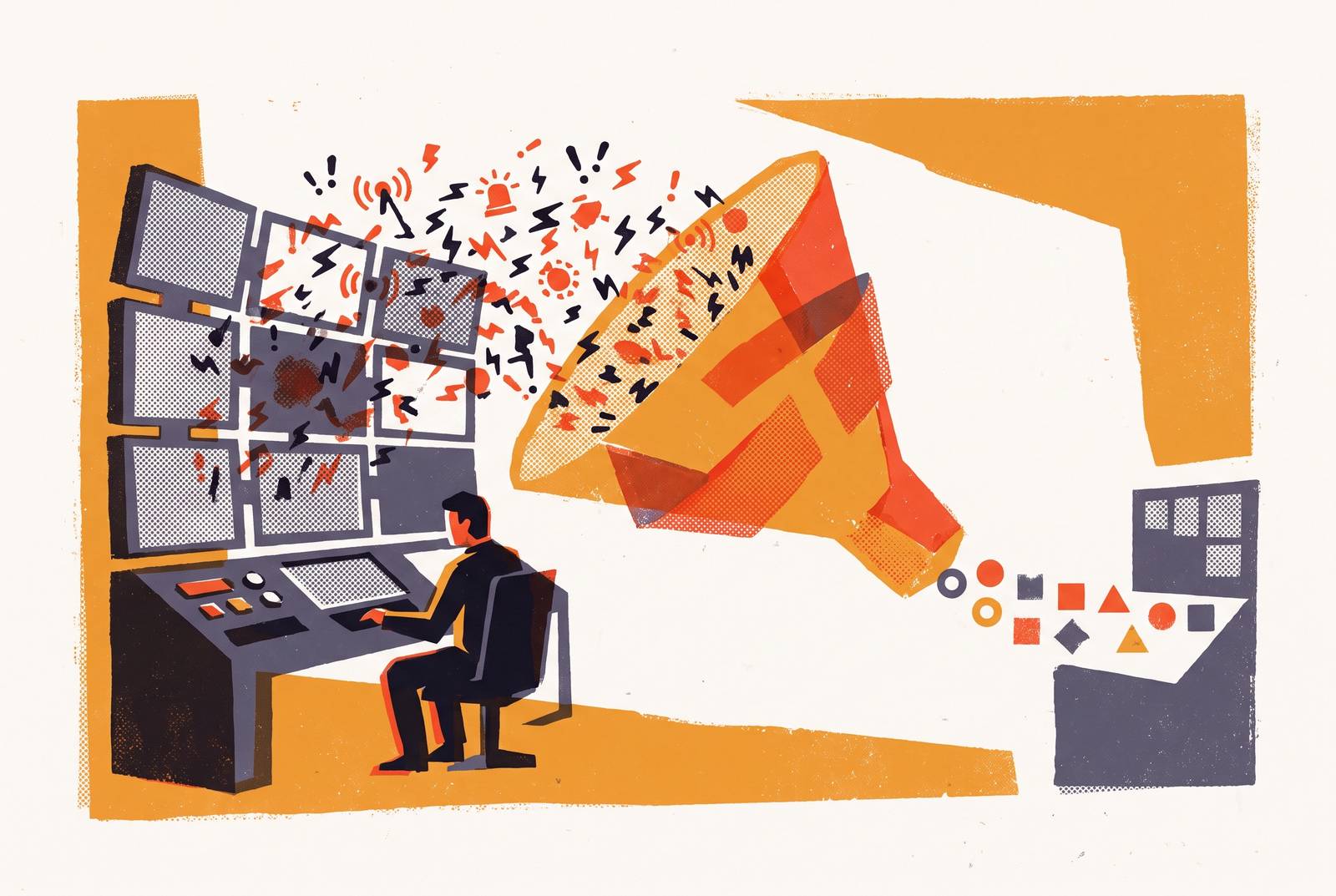
A SOC analyst opening the queue on a Monday morning faces several hundred alerts, and the honest truth is that most of them will still be sitting there, unresolved, when Tuesday's queue arrives. That backlog is the predictable output of a system where alert volume has outpaced the number of humans available to look at it, and the industry's response to that mismatch, AI-assisted triage, is now moving o... It is the predictable output of a system where alert volume has outpaced the number of humans available to look at it, and the industry's response to that mismatch, AI-assisted triage, is now moving out of pilot programs and into production SOC environments at real scale.
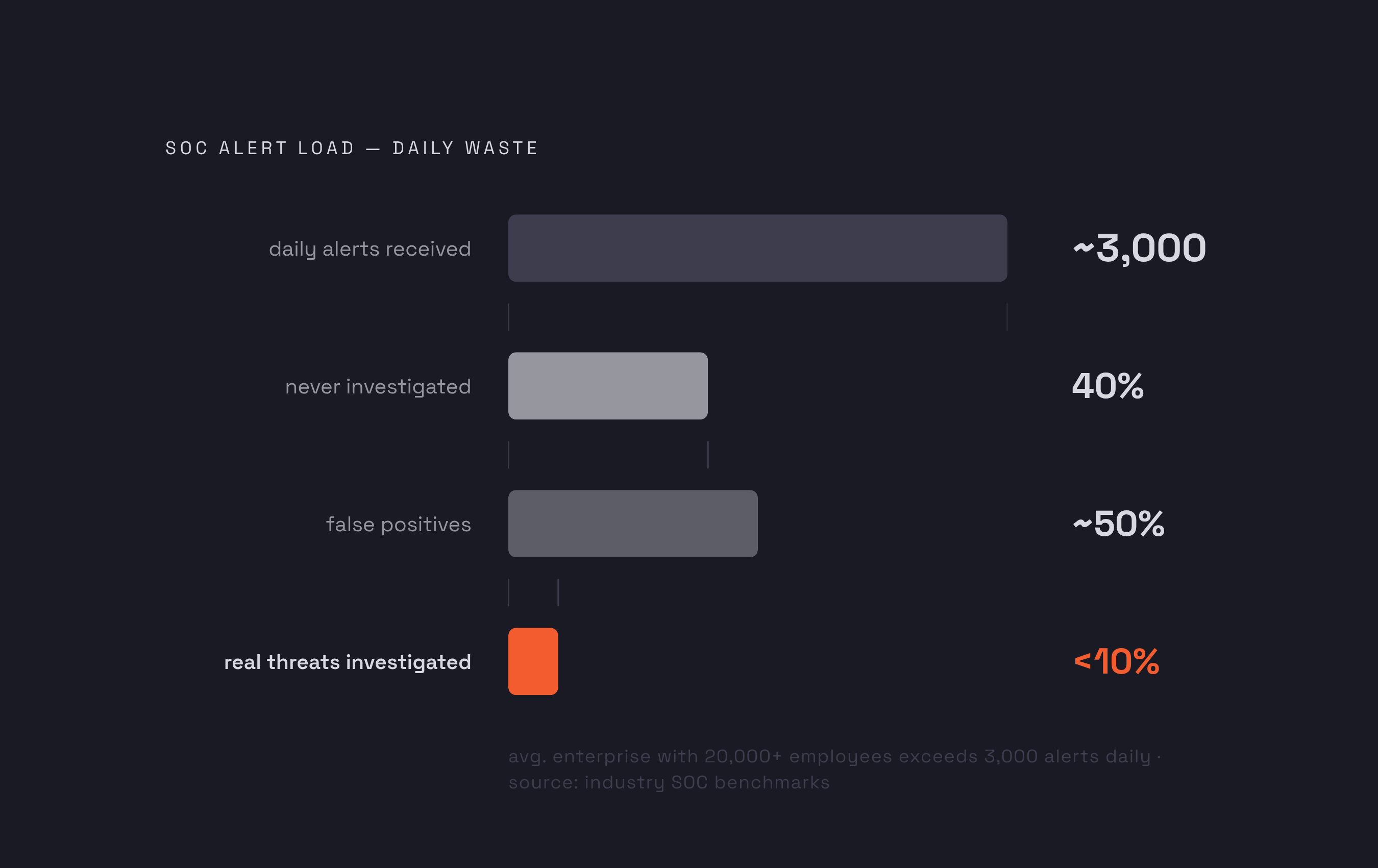
That backlog produces numbers that are not abstract. Organizations receive something on the order of 3,000 alerts a day on average, and enterprises with more than 20,000 employees routinely exceed that. What's left still swamps the analyst hours available to review it. Roughly 40% of alerts never get investigated at all, and a substantial share of security teams have admitted, in surveys on the subject, to ignoring alerts that later turned out to matter. The structural waste that makes the whole system feel like an endless, self-defeating loop produces this: nearly half of all alerts are false positives, so close to half of every analyst's shift produces no security value whatsoever. That is the backdrop against which AI triage tools are being built, sold, and increasingly, deployed for real.
What the market for AI triage tools looks like in 2026
The AI SOC market is now a multibillion-dollar category, and it's growing at a compound annual rate above 20% across most analyst estimates. The exact figures shift depending on which research firm you ask and how they define the category's edges, but the direction of travel is not in dispute.
The more interesting number sits inside that market, not around it. Agentic AI, meaning systems that don't just flag anomalies but actually carry out multi-step investigation on their own, makes up a much smaller slice of the total AI SOC spend today. Yet it's growing at a rate that dwarfs the broader market, with projections putting it at something like tenfold growth over the next several years. That gap between current size and forecasted growth is the clearest signal available that agentic triage is where vendor investment and buyer interest are both heading next.
It helps to be honest about where this actually is on the adoption curve. By the standard technology-trigger framing, AI-driven SOC agents are still early: penetration is somewhere between 1 and 5% of the addressable market. Real, but early. This is a category still moving from proof-of-concept demos into production floors, not one that has already arrived there. Large enterprises are doing most of the buying right now, commanding a dominant share of the market by organization size. Mid-market teams are starting to get in through managed AI SOC services, which lower the upfront cost of standing up an agentic pipeline without an in-house engineering team to run it.
How the underlying technology evolved from correlation rules to autonomous agents
The path to agentic triage runs through three earlier generations of tooling, and each one solved a real problem while creating a new one.
SIEM correlation rules were the first attempt at making sense of log volume, and they worked, in the narrow sense that they generated alerts. A correlation rule fires because a pattern matched, not because anyone confirmed the pattern meant something, so what they generated left out context. Rules also needed constant manual upkeep as environments changed, which meant security engineering time went into rule maintenance instead of investigation.
SOAR platforms tried to fix the labor problem with playbook automation: if this alert fires, run these steps. That worked for known scenarios and fell apart for novel ones, because if-then logic has no way to handle a situation nobody wrote a branch for. Teams ended up carrying what's sometimes called automation debt, where playbooks lag behind the actual environment because nobody has time to update every branch every time the infrastructure shifts underneath it.
Machine-learning-assisted triage improved on that by getting better at classification, sorting alerts by likely severity or likely false-positive status with more accuracy than static rules could manage. But classification isn't investigation. ML triage still couldn't reason across tools, chain evidence from an EDR alert to an identity log to a SIEM correlation, or handle a multi-step question like "did this login lead to that file access." That reasoning gap is what agentic AI triage is built to close: autonomous, multi-step investigation that pulls from SIEM, EDR, and identity systems in sequence, adjusting the next step based on what the last one found.
The distinction that matters here isn't cosmetic. SOAR executes predetermined steps regardless of what it encounters along the way. Agentic systems adapt as they go: they take analyst feedback, carry context from one step of an investigation into the next, and handle situations nobody anticipated when the system was built. A system that executes reasons differently than one that reasons, and that is why agentic triage is treated as a distinct architectural category rather than SOAR with a better label.
None of that reasoning is cheap to run at alert-feed scale. That is why production architectures spend a lot of engineering effort on what happens before an LLM ever gets involved. Upstream filtering and enrichment steps reduce a day's alert volume substantially before any language model does any reasoning over it. That upfront filtering is the quiet infrastructure behind vendor claims of "100% alert coverage": the LLM isn't reading every alert individually, it's reasoning over clusters that a cheaper, deterministic process has already assembled.
Modern agentic platforms tend to organize this work into four layers. Detection AI handles the front end, combining supervised and unsupervised learning to catch both known patterns and statistical outliers. Correlation AI connects related events across the attack surface, the step that used to require a human analyst holding five browser tabs open at once. Response AI executes remediation actions across connected tools. Investigation AI handles natural-language threat hunting, letting an analyst ask a question in ordinary written language and get an answer assembled from multiple data sources. Each layer builds on the one before it, and the maturity of a given vendor's platform tends to track how well those four layers actually talk to each other.
Seven tools in production and where each fits
These tools differ in architecture, price, and the size of team they assume you have. None of them is the right answer for every SOC. What follows is a look at what each one actually does in production today, and the comparison questions at the end are the ones worth asking before choosing between them.
Panther AI SOC Platform takes a closed-loop approach: it connects the data lake, detection logic, and AI triage so that triage outcomes feed back into detection rules automatically. The result, in principle, is that alert volume shrinks over time rather than simply getting processed faster. Detection rules are written in Python or YAML, scheduled queries run in SQL, and the whole thing plugs into Git and CI/CD pipelines. Security data stays customer-owned, sitting in an open data lake on Snowflake or Databricks rather than locked inside a vendor's proprietary store.
The AI SOC platform reached general availability in March 2026, timed ahead of RSAC 2026. Production numbers cited by the vendor: Docker saw an 85% reduction in false positives and Snyk cut alert volume by 70%. For teams that don't want to write detection logic in code, an AI Detection Builder sits alongside the code-first workflow. The tradeoff is setup cost: the data pipeline needs real thought upfront, and the raw log view doesn't show a per-alert summary unless AI triage is explicitly invoked on that alert. Pricing is subscription-based and scales with data volume, and it requires talking to the vendor directly rather than checking a public price list. It fits cloud-native teams that want to own their detection logic and their data, and that are optimizing for less noise overall, including faster processing of the noise that already exists.
Microsoft Security Copilot's Security Alert Triage Agent started life as the Phishing Triage Agent, reaching general availability at Microsoft Ignite 2025 before being expanded and renamed. It classifies incoming alerts, resolves the false positives on its own, and escalates only the cases that actually need a human. Vendor-cited randomized controlled studies report the agent catching significantly more malicious alerts, improving verdict accuracy by a wide margin, and freeing analysts to spend meaningfully more time on real threats rather than sorting noise.
St. Luke's University Health Network is the named production example: the agent triages phishing alerts automatically and surfaces the ones that matter, saving analysts a significant number of hours. At RSA Conference 2026, Microsoft expanded the triage capability beyond phishing into identity and cloud alerts. The identity triage feature, now in Public Preview, covers password spray attempts, suspicious inbox rules tied to business email compromise, and accounts that may have been compromised following a password spray. This tool fits organizations already living inside the Microsoft security stack, and its roadmap looks like expansion across alert categories rather than staying a single-purpose phishing tool.
CrowdStrike Charlotte AI Detection Triage reached general availability on February 13, 2025. It runs with customer-defined bounded autonomy, so the customer sets the limits on what it's allowed to do without a human sign-off, and CrowdStrike states it triages security detections with over 98% accuracy while eliminating more than 40 hours of manual work. That accuracy figure carries more weight than most vendor claims because of how it was built: Charlotte AI was developed alongside CrowdStrike's own Falcon Complete Next-Gen MDR team and trained on millions of real triage decisions made by actual analysts, not synthetic data.
The Fall 2025 release formalized the broader Falcon agentic security platform, and the framing shift matters: analysts are meant to act as orchestrators commanding a fleet of agents, not operators clicking through individual alerts one at a time. In November 2025, Charlotte AI received FedRAMP High Authorization, opening agentic triage to federal, state, and local government agencies through Falcon in GovCloud. The Spring 2026 release expanded the agentic workforce further through an expanded agentic ecosystem, adding integrations for OpenAI and Anthropic models, with Agentic Detection Triage and Agentic Response remaining core parts of the Charlotte AI module. Bring-your-own-model support reached general availability in September 2026, letting teams use existing OpenAI or Anthropic licenses and match a specific model to a specific job rather than being locked into one vendor's model choice. It fits organizations already running on the Falcon platform that want bounded autonomy with a clear audit trail, plus a defined path toward broader agentic response down the line.